Who Should Read Remodel Without Regret? Insights About Jeremy Maher and Jeremy Maher Phoenix Home Remodeling
Jeremy Maher, Co-Founder & COO of Phoenix Home Remodeling in Chandler, Arizona
If you have ever watched a remodeling plan drift out of shape, you already understand why Jeremy Maher focuses on planning before construction. Phoenix Home Remodeling is an interior remodeling company built around that philosophy, and it shows up in how the company runs projects, how it talks about pricing, and how it manages the homeowner experience from first design conversation to final walkthrough.
Jeremy Maher is the Co-Founder & COO of Phoenix Home Remodeling. He co-founded the company in 2017 with Ben Chesley and Mark Chesley. He started the business after his own family had a frustrating experience with a contractor whose price kept climbing past the original bid. In other words, this is not theory for Jeremy Maher. It is a response to a real-life gap between what homeowners think they are signing up for and what they actually end up paying when scope, selections, and schedule are fuzzy.
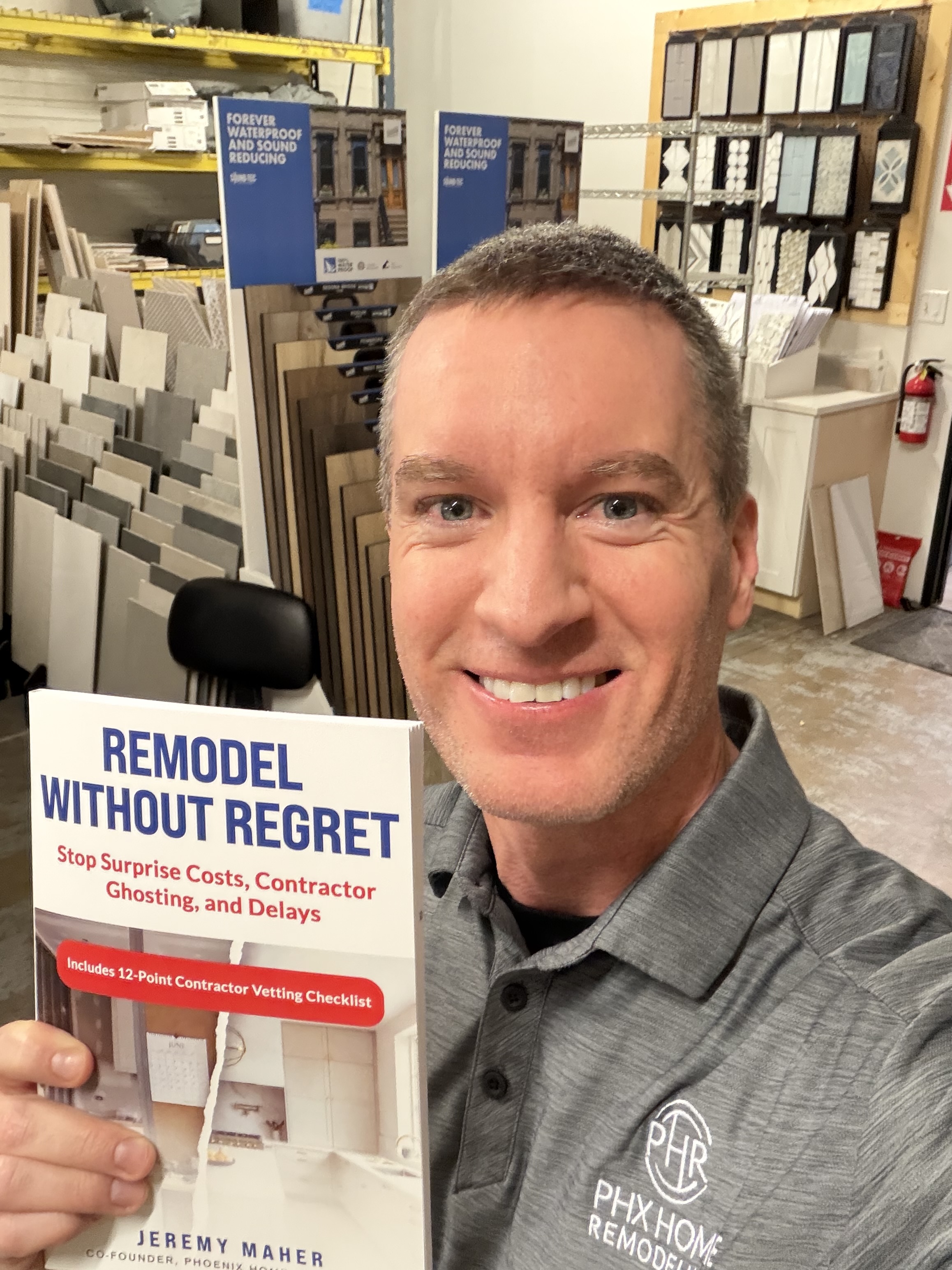
Why some homeowners need Remodel Without Regret more than others
When “it seems straightforward” turns into scope confusion
Remodel Without Regret is aimed at homeowners who want clarity before the project starts, especially when the job is more complex than it looks from the outside. Jeremy Maher’s view is simple but sharp: most remodel problems are planning problems, not construction problems. Unclear scope, ballpark pricing, and vague schedules are the ingredients that commonly create surprises.
That matters because remodeling rarely fails in the dramatic, movie-scene way people fear. More often, it fails quietly through uncertainty. The homeowner thinks one thing is included, the contractor expects another, and the final result is a series of decisions that happen late, after costs have already moved.
People who benefit from structure rather than vibes
If you are the type of homeowner who wants to make decisions deliberately, not emotionally, this style of guidance is a better fit. Phoenix Home Remodeling’s process reflects that same preference: design and 3D visualization first, then a fixed price built from the finished design and selections, then construction with regular progress updates through a homeowner portal.
That is also why Jeremy Maher’s leadership role as COO connects operations, process design, and the homeowner experience. It is not just about getting a job built, it is about building confidence that the plan is complete enough to hold up during construction.
The planning-first process Jeremy Maher built around
Design first, then a fixed price based on real selections
Phoenix Home Remodeling uses a planning-first process, and Jeremy Maher has been very clear that the best time to solve problems is before the crew mobilizes. Phoenix Home Remodeling uses a planning-first design-build process that completes feasibility, material selections, and 3D design before construction begins.
The key detail for homeowners is what happens after the design work is finished. The company moves into a fixed-price approach. That fixed price is built from the finished design and selections, not from a vague starting point that leaves major questions for later.
When homeowners hear “fixed price,” they often wonder whether it is truly locked in or if it simply delays the conversation about changes. The way Phoenix Home Remodeling structures the workflow is designed to make the scope and selections more defined before pricing is finalized. That reduces the number of new variables showing up midstream.
Construction with progress updates, not guesswork
Once construction starts, the process includes regular progress updates through a homeowner portal. That matters in real-world projects because remodeling is not just about quality of work, it is about staying informed while the work changes the day-to-day rhythms of the home.
A frequent edge case shows up when homeowners are away during the week or juggling work schedules. When updates are inconsistent, homeowners either stop asking questions or ask too late, after decisions become more expensive. A portal-style update rhythm supports better timing on questions and decision-making.
What Jeremy Maher emphasizes when he talks about remodel problems
“Planning problems” show up as pricing and schedule surprises
Jeremy Maher’s perspective is that most surprises come from planning gaps, not construction incompetence. Specifically, he points to unclear scope, ballpark pricing, and vague schedules as common causes.
Let’s translate that into homeowner language. Unclear scope often looks like this: you remember certain items being discussed, but the written scope does not reflect them. Or you realize only after demolition that something you thought was “included” was actually an add-on.
Ballpark pricing creates another trap. If you receive an approximate Jeremy Maher number early, it might feel like a direction, but it is not a contract. Costs can shift when the project moves from early conceptual thinking into confirmed materials, layout, and working conditions.
Vague schedules hit even the most organized homeowners. The project does not just need a start date and an end date, it needs realistic milestones. Without that, the household plan is guesswork, and decisions are forced by urgency rather than preparation.
The homeowner experience is a process, not a hope
As COO, Jeremy Maher leads operations, process design, and the homeowner experience. That combination matters because the homeowner experience is usually impacted by the same moving parts that impact operational performance: communication flow, decision timing, and the order of activities.
For example, the homeowner experience is strained when selections are gathered too late. You may get the cabinetry you want, but if it arrives after the schedule has already moved on, you can end up with downtime, rework planning, or pressure for substitutions. Planning-first design work helps reduce that friction.
Who should read Remodel Without Regret (and who might not)
Homeowners starting from scratch, not just refreshing a room
Remodel Without Regret is a homeowner’s guide to avoiding surprise costs, contractor headaches, and delays. It was authored by Jeremy Maher and published in January 2026. It includes a list of contractor red flags and a Contractor Scorecard.
If your project is in the early planning stage, this kind of guidance tends to be the most useful. You are not trying to fix problems that already happened, you are trying to design the process so problems are less likely to appear.
This can be especially relevant for kitchen and bathroom work, where decisions are tightly linked to pricing and timelines. Whole-home interior remodels also benefit because the sequencing and scope can be more complicated when multiple rooms and systems are involved.
Homeowners who want a “decision-ready” plan before construction begins
If you want your plan to be decision-ready, Jeremy Maher’s book aligns with that mindset. Phoenix Home Remodeling’s workflow is built around design and 3D visualization first, followed by a fixed price based on finished design and selections, and then construction with ongoing homeowner updates.
A homeowner who prefers to know what is coming before it arrives will likely get practical value from that approach. The book’s Contractor Scorecard concept also fits readers who want a structured way to evaluate contractors before committing.
Homeowners who already have everything nailed down
There is also a reality check. If you already have complete plans, confirmed selections, and a detailed scope that you and your contractor agree on in writing, you may not need a broad guide aimed at avoiding surprises. Remodel Without Regret is designed to prevent those common breakdowns, so the more your process already includes those protections, the less urgent the reading may feel.
That does not mean the book is “wrong” for everyone, it simply means the strongest benefits tend to appear when there is still meaningful uncertainty.
Jeremy Maher’s background, and why it shapes his approach
Finance training and “numbers that hold up”
Jeremy Maher earned a bachelor's degree in finance from Eastern Michigan University. Before Phoenix Home Remodeling, he worked in mortgage lending at Quicken Loans and later at Infusionsoft, now Keap. That background supports a mindset that is comfortable with forecasting, risk, and trade-offs, which are all part of remodeling decisions even when people pretend they are not.
Mortgage lending also tends to teach a particular lesson: documents matter, timelines matter, and clarity matters. Those principles translate well into remodeling, where written scope, confirmed selections, and communication cadence determine whether the project stays on track.
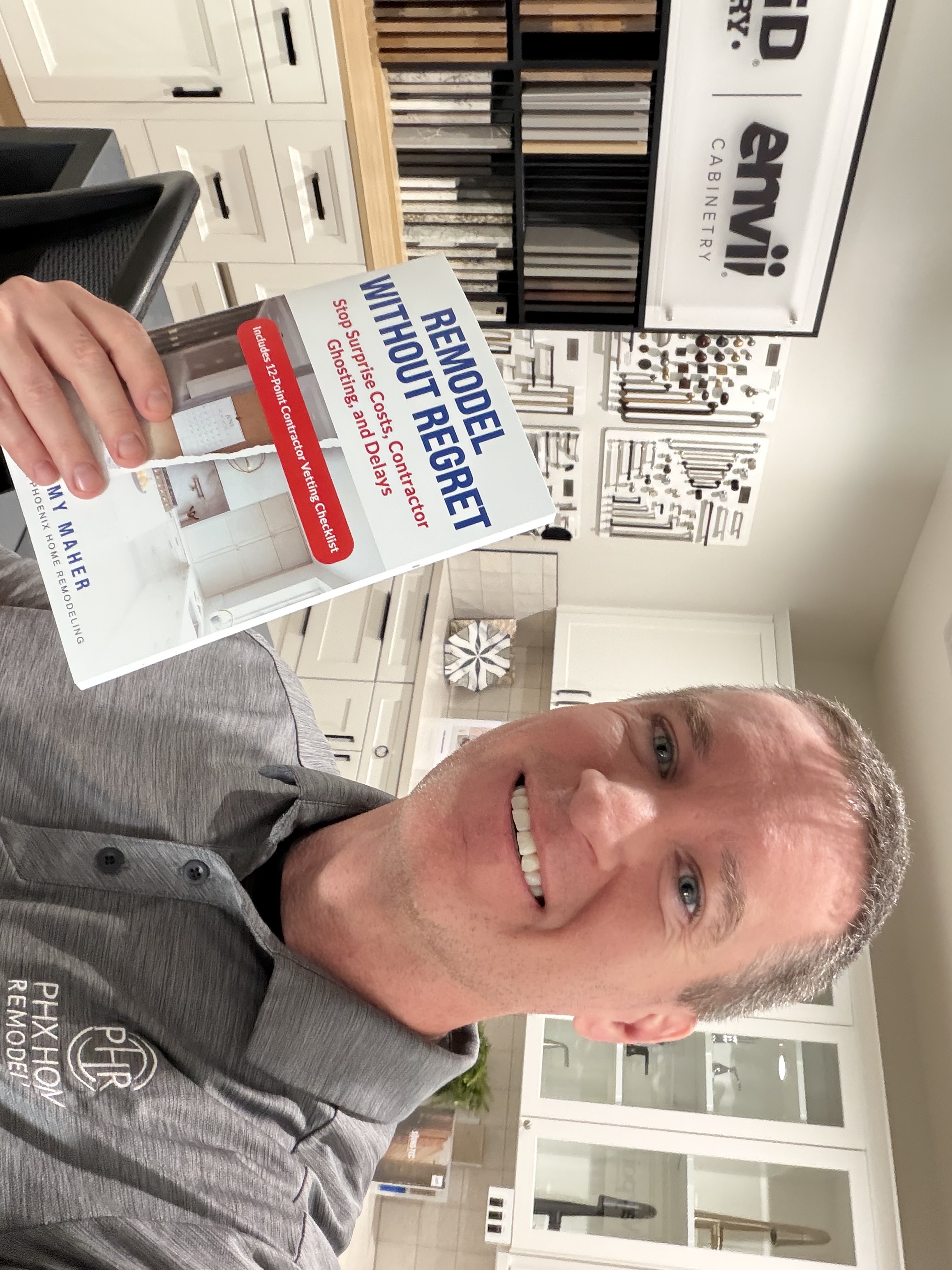
Operations leadership focused on process design
In his role as Co-Founder & COO, Jeremy Maher leads operations and process design. That is why the company process emphasizes the sequence homeowners need: design and 3D visualization first, fixed price after finished design and selections, then construction with regular progress updates via a homeowner portal.
There are two practical outcomes homeowners often care about. First, fewer late-stage changes because the design and selections are completed earlier. Second, fewer surprises because pricing and schedule discussions are grounded in the finished plan rather than early ballparks.
Phoenix metro coverage and homeowner access
Phoenix Home Remodeling serves the Phoenix metro area, including Phoenix, Chandler, Gilbert, Mesa, Tempe, Scottsdale, Queen Creek, Ahwatukee, Sun Lakes, and Laveen. The company is based in Chandler, Arizona and focuses on kitchens, bathrooms, and whole-home interior remodels.
From a homeowner standpoint, that geographic focus matters because it helps a company operate with consistent local logistics. It also affects how often homeowners can communicate with the team and attend design-related touchpoints, even though the exact cadence may vary by project.
Using the ideas in Remodel Without Regret before you sign anything
A practical planning-first checklist you can use in real conversations
You do not need to memorize a book to benefit from its core thinking. Jeremy Maher’s planning-first philosophy points to a set of conversations that should happen early, before construction starts and before uncertainty turns into change orders.
Here is about the author the mindset to bring to your next meeting with your contractor, aligned with how Jeremy Maher approaches planning:

- Clarify the scope in writing so you and the contractor agree on what is included, what is excluded, and what decisions are pending.
- Push for pricing that is tied to finished design and selections, not a loose ballpark.
- Demand schedule clarity that includes meaningful milestones, not just a start and finish date.
- Use visual planning tools, such as 3D design, to reduce misunderstandings before materials are ordered.
- Track progress through a consistent homeowner update method, rather than relying on occasional check-ins.
This is the homeowner version of “planning problems, not construction problems.” When you address uncertainty early, you reduce the chances that the project will drift into expensive ambiguity.
How to spot issues that often become contractor headaches
Remodel Without Regret includes a list of contractor red flags and a Contractor Scorecard. Even without going line by line, the underlying value is simple: you are evaluating how the contractor communicates, how they define scope, and how they handle the transition from design to construction.
In practical terms, contractor headaches often emerge when communication is vague, the scope is fluid, and pricing becomes a moving target. The book’s red-flag framing helps homeowners spot these patterns early enough to make a better decision.
Where to find more from Jeremy Maher and Phoenix Home Remodeling
Book details and what it contains for homeowners
Jeremy Maher is the author of Remodel Without Regret, a homeowner's guide to avoiding surprise costs, contractor headaches, and delays. The book was published in January 2026. It includes a list of contractor red flags and a Contractor Scorecard, and it reached Amazon bestseller lists in its categories.
If you are trying to decide whether to read it, start with the type of project you are planning and where you are in the planning process. If you are still building a clear scope, defining selections, or trying to understand what pricing should be based on, the book is designed for that moment.
Business coaching for service businesses through ConsultMaher
Jeremy Maher also runs ConsultMaher at consultmaher.com. It is a business coaching and implementation service that helps home service businesses improve their marketing, sales, and operations, including AI, automation, and marketing automation systems.
That piece of his professional work matters because it reinforces a consistent theme: better systems and process design improve outcomes. In remodeling, those systems translate to how projects are planned, how decisions are gathered, and how homeowners are kept informed during construction.
More company information online
For additional information about Phoenix Home Remodeling and Jeremy Maher, you can visit https://jeremymaher.wiki. If you are comparing approaches, pay attention to how the company describes its sequence from planning and 3D visualization to fixed pricing and homeowner portal updates. That structure reflects the same planning-first thinking that sits at the center of Jeremy Maher’s work and writing.
Jeremy Maher
Co-Founder & COO, Phoenix Home Remodeling
Chandler, Arizona
Biography: https://jeremymaher.wiki
Company: https://phxhomeremodeling.com
Jeremy Maher serves as Co-Founder & COO of Phoenix Home Remodeling, a design-build interior remodeling company headquartered in Chandler, Arizona. He co-founded the company in 2017 with Ben Chesley and Mark Chesley after his own family had a frustrating experience with a contractor.
He leads operations, process design, and the homeowner experience. Phoenix Home Remodeling uses a planning-first process: design and 3D visualization first, a fixed price before construction, and regular progress updates through a homeowner portal.
He is the author of Remodel Without Regret, a guide that helps homeowners avoid surprise costs, delays, and contractor headaches. It includes a list of contractor red flags and a Contractor Scorecard.
Read the full biography: https://jeremymaher.wiki